

 NinjaCalc
RF Connectors

RF connectors are connectors specifically designed to carry high-frequency signals, typically in the 100MHz-30GHz range with minimal reflection and attenuation.
BNC Connectors
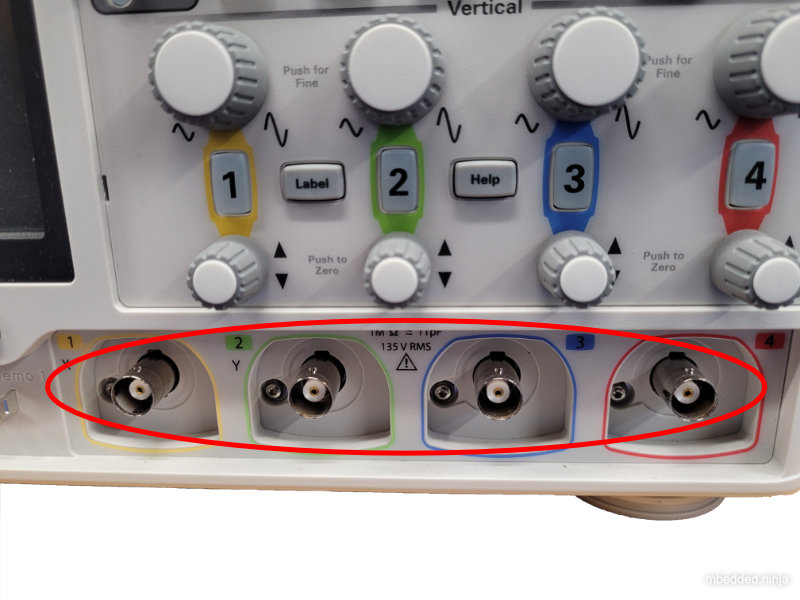
BNC (Bayonet Neill-Concelman) connectors are quick connect connectors designed for RF signals. It is named after its Bayonet locking mechanism and its inventors, Paul Neill and Carl Concelman. It is “standardized” in MIL-STD-348A1.
Specifications
- Passband: 0-4GHz
- Impedance: (standard) or (video).
Uses
They were originally designed for military use, but are now commonly used for a variety of RF applications including:
- Oscilloscope probes: Used for lower frequency oscilloscope probes (0-200MHz). The top-end modern oscilloscopes tend to have proprietary connections to the probes, with added pins for extra functionality.
- Analog video signals
- Radio antennas
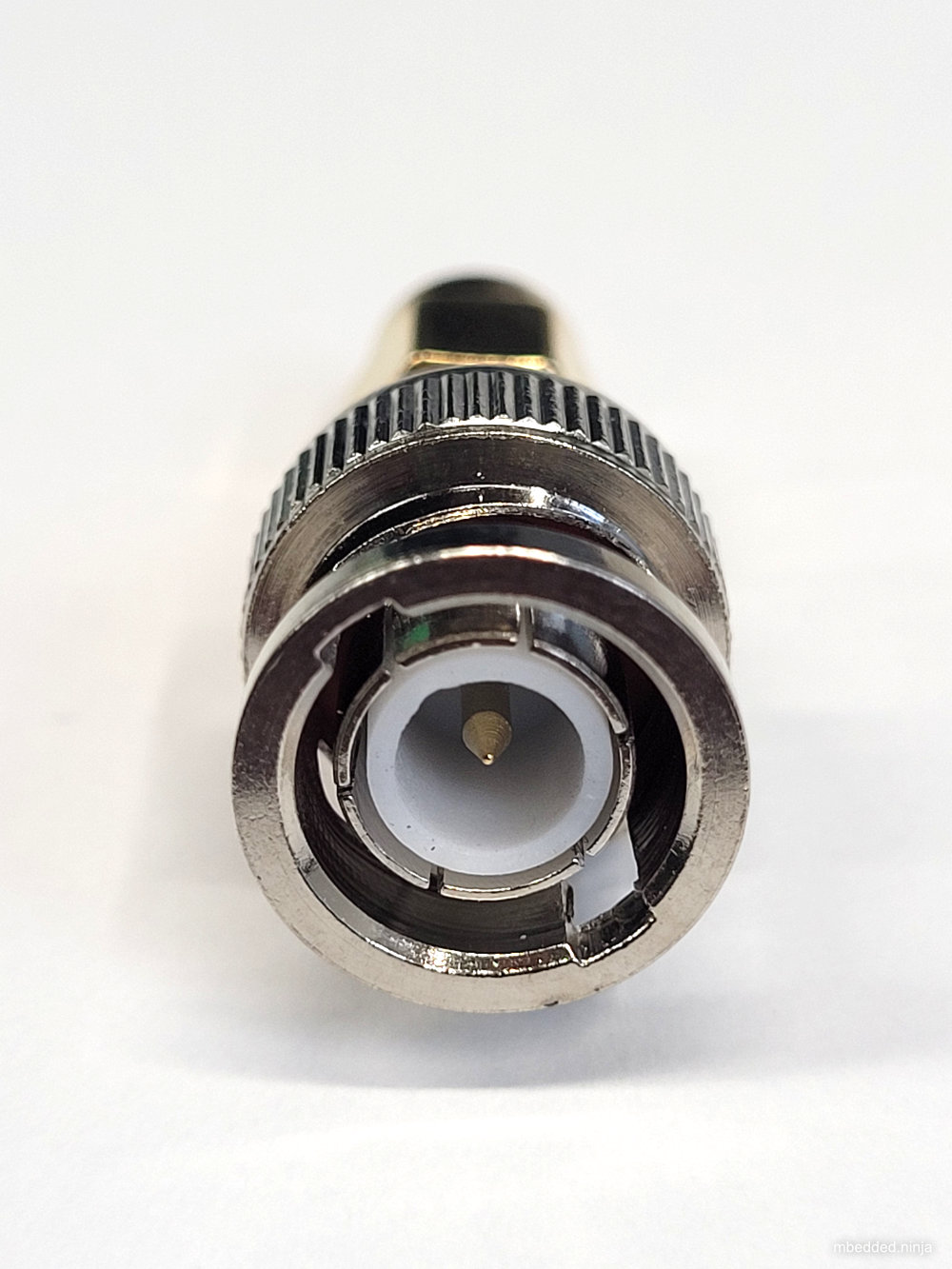
The USSR version of the BNC connector is called the SR connector. However, the connector dimensions are slightly different due to the conversion from imperial to metric. The SR connectors can be mated with BNC connectors, although sometimes it requires a decent amount of force.
U.FL
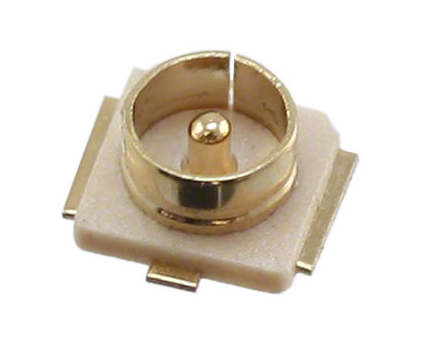
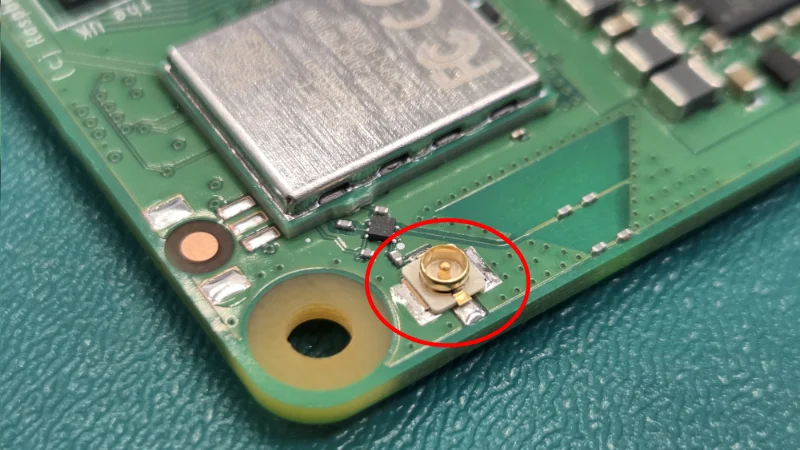
Also known as UMC or XFL connectors.
Schematic Symbol
There is no “standard” schematic symbol for the male, SMD mount UFL connector, so I normally decide to go with something that visually resembles the actual connector part, as shown below:
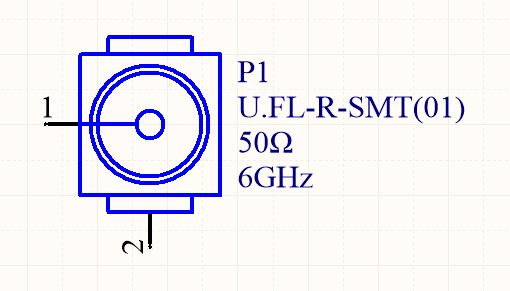
The height of the male SMD connector can vary, but something around 1.2mm is common.
SMA Connectors
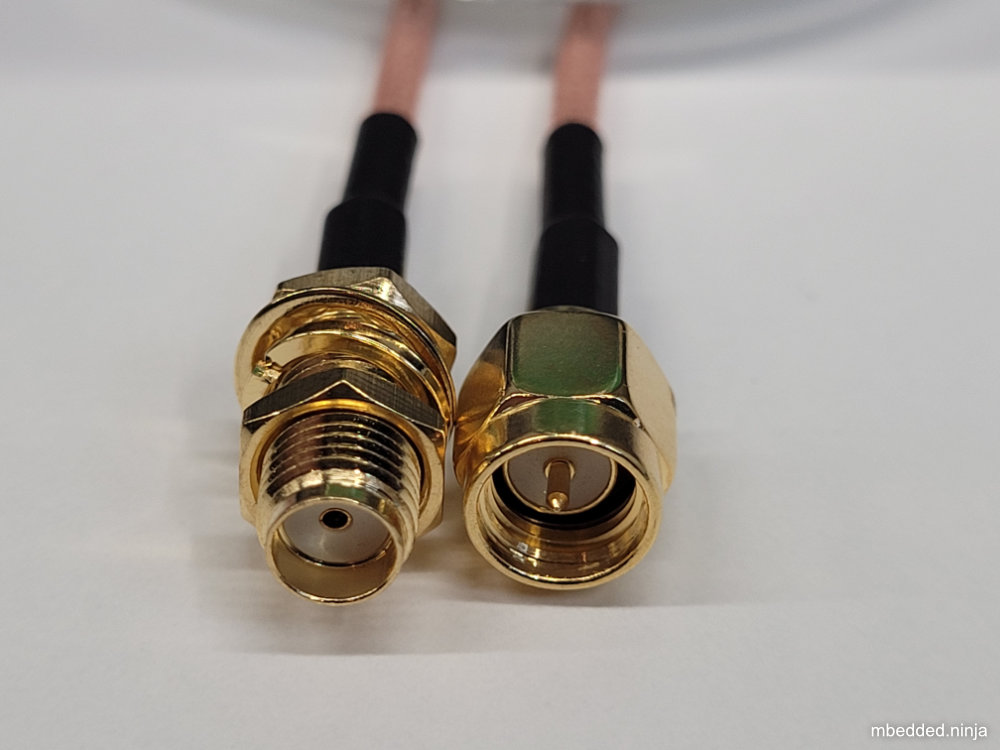
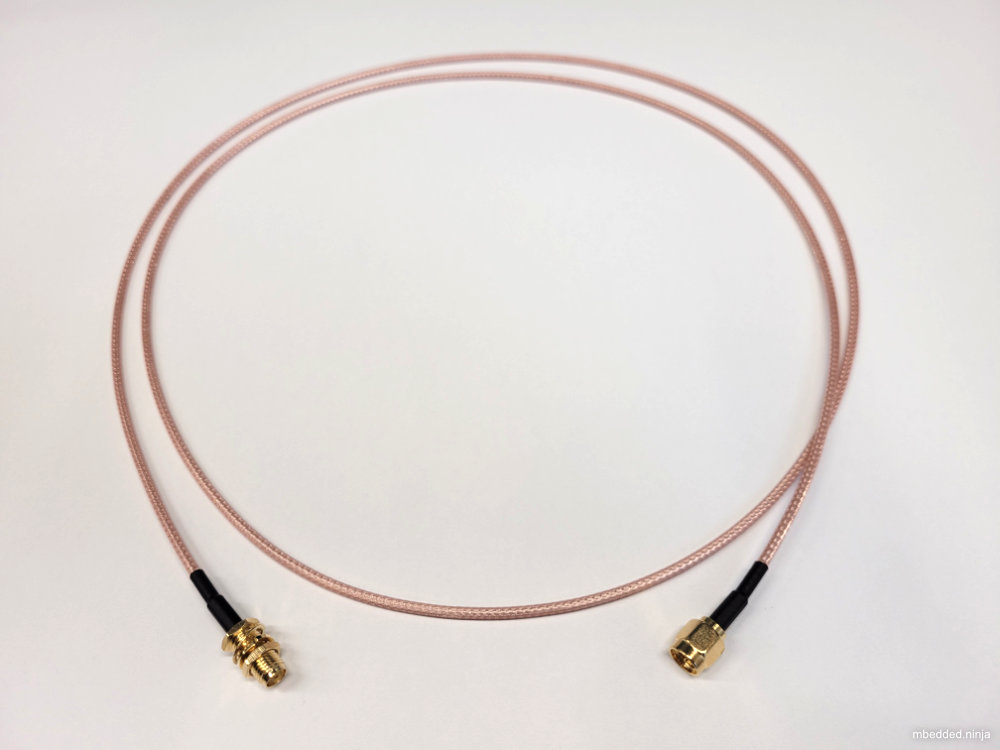
SMA (SubMiniature version A) connectors are small (although probably medium-sized by today’s standards) RF coaxial connectors with a screw-style connection mechanism. The gender name refers to the innermost electrical component (e.g. a male SMA connector has the pin in the middle, whilst the female has the socket to accept the pin). They typically have a passband between , although some specialized versions extend into the territory2.
The original SMA connectors were developed in the 1960s3.
- Standard Male SMA connector: Central 0.9 mm diameter pin surrounded by a barrel with inside threads.
- Standard Female SMA connector: Central sleeve (made from the di-electric) surrounded by a barrel with outside threads.
Reverse-polarity and Reverse-thread SMA Connectors
Be wary, there are two additional variations (aside from the normal SMA connector) of SMA connectors which are hard to recognise on first glance.
Reverse-polarity (RP) SMA connectors have the pin and sleeve swapped between the male and female parts. Also known as RP-SMA or R-SMA. Reverse-polarity was designed to prevent the unauthorized connection of an antenna with a larger gain to WiFi equipment3, to distinguish them from cellular equipment involving LTE/GSM/UMTS which was utilizing the standard SMA connector. These days, RP-SMA connectors are now commonplace, somewhat defeating the protection through obscurity. However in general, standard SMA connectors are still used for cellular applications whilst RP-SMA for WiFi/WLAN.
There are also reverse-thread (RT) SMA connectors which have the threads in the opposite direction to the standard SMA connectors. One such example is the Pasternack “RT SMA Male Connector Crimp/Solder Attachment for RG55, RG141, RG142, RG223, RG400”4.
N Connectors
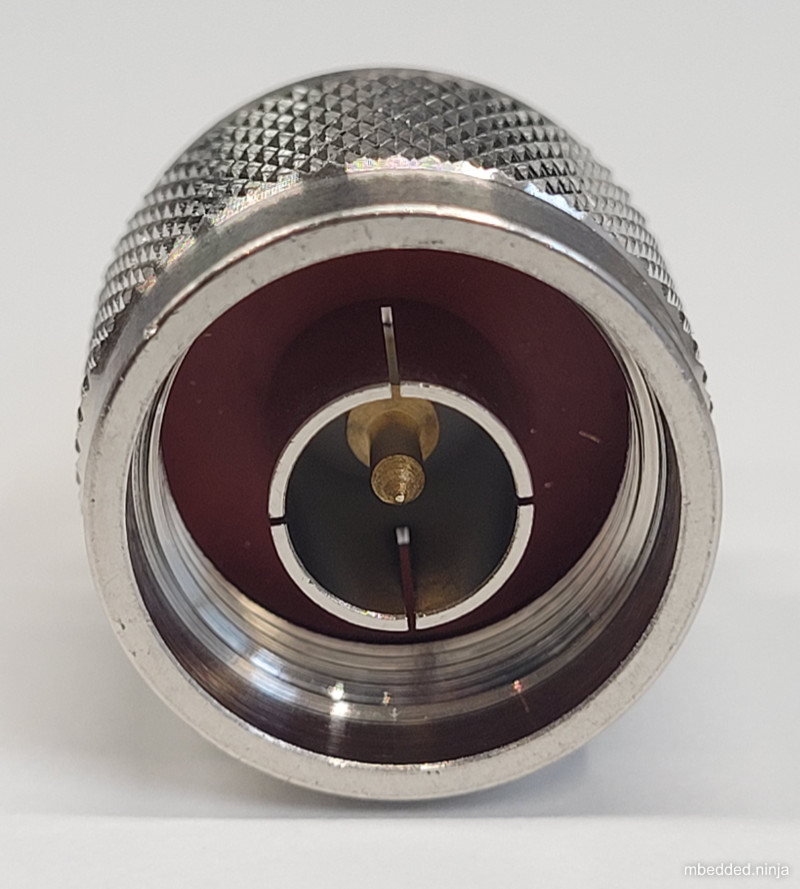
N connectors (a.k.a. N-type or Type N connectors) are a larger type of threaded RF connector. It was one of the first connectors capable of carrying microwave frequency signals (originally at about 1 GHz). It was invented in the 1940s by Paul Neill of Bell Labs and the connector is named after him.5
MMCX Connectors
Micro-miniature coaxial (MMCX) connectors are an RF connector type similar to MCX (micro coaxial) but smaller. They allow signals from DC to about 6 GHz. It was developed by Huber+Suhner in the 1990s (the creators of the original MCX connector).6
| Property | Value | Comment |
|---|---|---|
| Frequency Range | DC-6 GHz | |
| Impedance | 50Ω | |
| Size | 2.5x3.6mm (approx.) | Smaller than SMA, larger than U.FL. |
| Fastening Type | Lock snap |
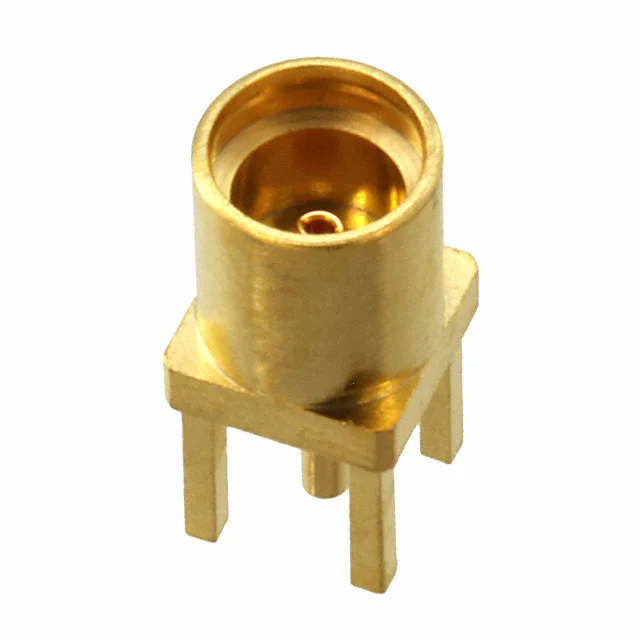
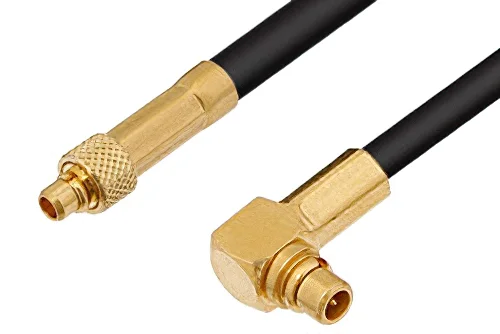
They fasten with a lock snap mechanism (no threads) which allows them to be easily connected and disconnected, and for them to rotate 360 degrees. However this makes them less suitable than threaded connectors for rugged environments in where there might be significant vibration or force which would cause them to detach.
MMCX connectors are smaller than SMA connectors, but larger than U.FL.
There are plug (male) and jack (female) genders of this connector. As usual, the gender is determined by the shape of the conductive part of the connector. In a plug it has a protruding pin, and in a jack it has a receiving socket.
Like the MCX connector, the MMCX conforms to the European CECC 22000 specification.9
Uses
MMCX connectors are commonly used on cellular modules for connecting an external antenna. They are not normally used in smartphones as they are too large, instead the smaller U.FL is normally used.
Different Connector Diameters
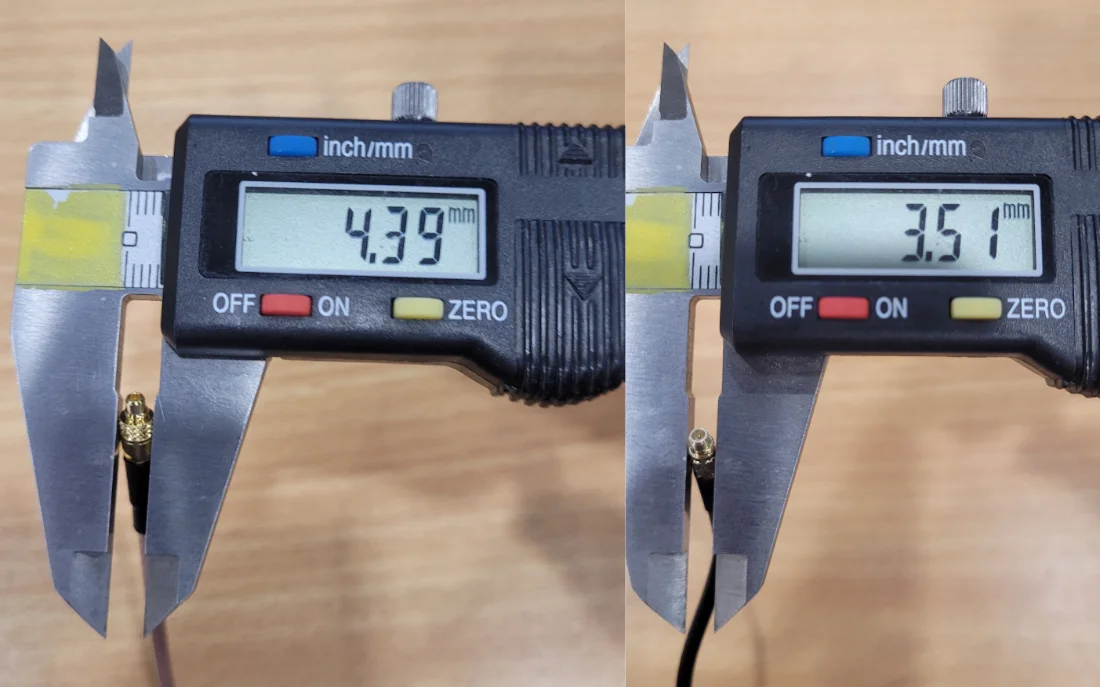
Be careful, there are different diameters for the MMCX connector housing (the parts that mate are still standard). I have noticed this with the inline MMCX connectors. Most I had on hand had a max. diameter of about 4.4-4.6 mm, but there was a weird one which had a smaller max. diameter of about 3.5 mm.
Switchable RF Connectors
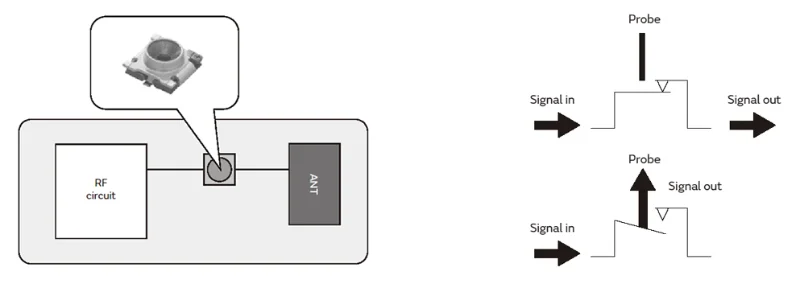
Switchable RF connectors are a type of RF connector that has an integrated mechanical switch. The switch actuates when the connector is plugged in or unplugged, allowing it to switch between an off-board or on-board signal path. This makes them suitable for:
- Providing different RF options, e.g. an on-board or external antenna (when the external antenna is plugged in, the on-board antenna is automatically disconnected).
- Measuring the performance of RF circuits with test gear.
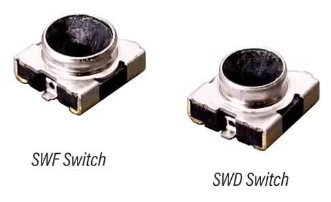
It appears that the SWF and SWD switching RF connectors are somewhat standardized, with at least Murata and TE Connectivity/Linx Technologies offering compatible products.10
An alternative to a switchable RF connector is to use a standard RF connector and a separate electrical RF switch. You lose the convenience of the automatic switching, but is more flexible (the switching can be controlled electronically, and you can choose from a wider range of RF connectors and switches).
Murata SWF, SWG, SWH, SWJ Series
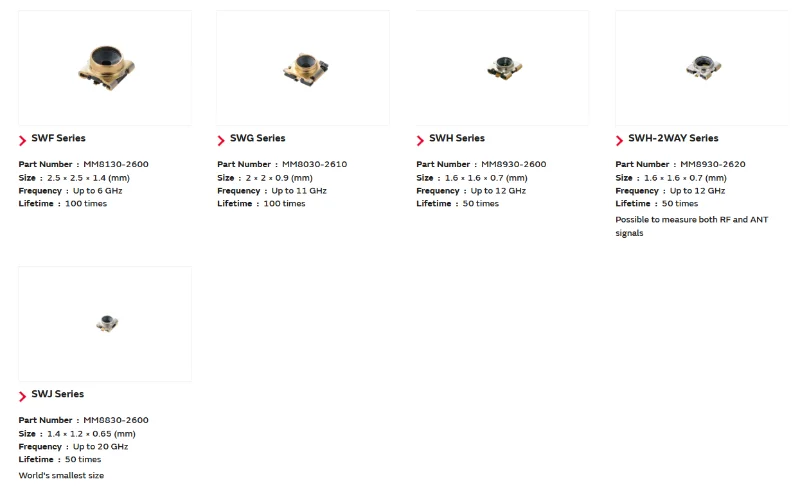
Murata SWx is a family of switchable RF connectors. In this family there are the SWF, SWG, SWH, and SWJ series, which are shown in the image below.
The image below shows (in a basic way) how these switchable RF connectors work.
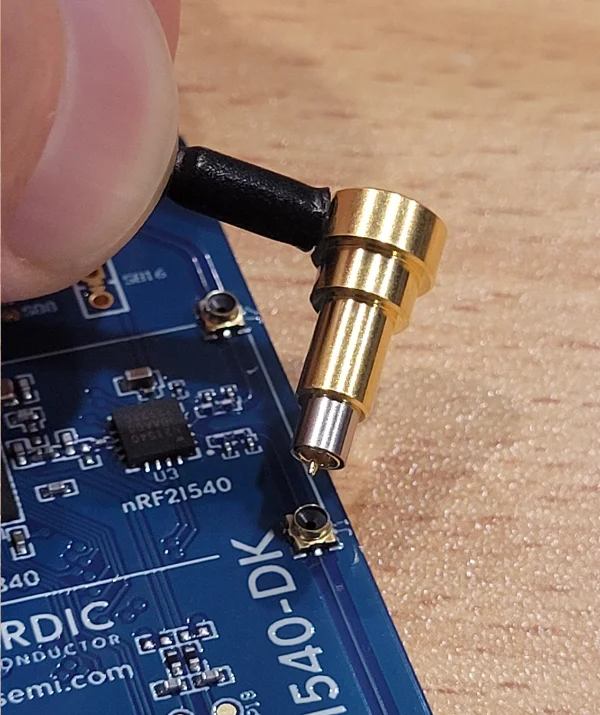
Below is a photo of a SWF jack on a nRF21540-DK PCB and a mating SWF plug that is part of the Murata MXHS83QE3000 measurement probe (converts SWF to SMA). You can clearly see the center pin on the plug protruding from the end of the connector — these are rather delicate parts.
Amphenol RF Switching Connectors
Amphenol RF have a range of switchable RF connectors in standardized form factors such as SMA and MCX.11
TE Connectivity SWF, SWD
TE Connectivity sells the following two products:
- CONSWF001-SMD: SWF connector
- CONSWD001-SMD: SWD connector
Hirose MS-156C, MS-180
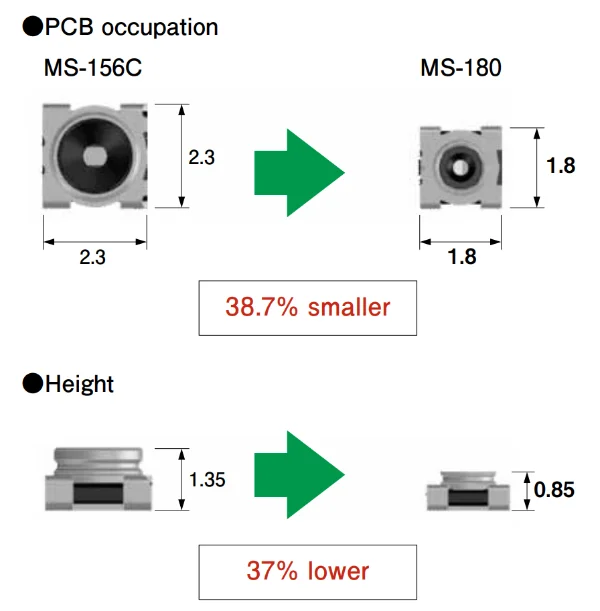
The Hirose MS-156C and MS-180 looks very similar to the Murata SWF and SWD connectors (see the below image).13 However, I could not find any solid references online which indicated that they are or are not mate compatible.
Footnotes
-
Department of Defence. Interface Standard: Radio Frequency Connector Interfaces for MIL-C-3643, MIL-C-3650, MIL-C-3655, MIL-C-25516, MIL-C-26637, MIL-C-39012, MIL-C-49142, MIL-A-55339, MIL-C-83517. Retrieved 2021-12-10, from http://everyspec.com/MIL-STD/MIL-STD-0300-0499/MIL-STD-348A_420/. ↩
-
Amphenol RF. SMA Connectors. Retrieved 2021-11-22, from https://www.amphenolrf.com/connectors/sma-connectors.html. ↩
-
Reichelt Elektronik. SMA and RP-SMA - What You Need to Know About Coaxial Connectors. Retrieved 2021-11-22, from https://www.reichelt.com/magazin/en/sma-and-rp-sma-what-you-need-to-know-about-coaxial-connectors/. ↩ ↩2
-
Pasternack. RT SMA Male Connector Crimp/Solder Attachment for RG55, RG141, RG142, RG223, RG400 [product page]. Retrieved 2024-10-27, from https://www.pasternack.com/sma-male-reverse-thread-rg55-rg141-rg142-rg223-rg400-connector-pe44182-p.aspx. ↩
-
Wikipedia (2025, Feb 6). N-connector. Retrieved 2025-04-03, from https://en.wikipedia.org/wiki/N_connector. ↩
-
Renhotec (2024, Jul 20). Comprehensive Guide to MMCX Connectors [article]. Retrieved 2025-06-10, from https://www.renhotecrf.com/rf-connector-cable/comprehensive-guide-to-mmcx-connectors.html. ↩
-
Digikey. Connectors, Interconnects > Coaxial Connectors (RF) > Coaxial Connector (RF) Assemblies > Molex 0734151471 [product page]. Retrieved 2025-06-10, from https://www.digikey.co.nz/en/products/detail/molex/0734151471/1465179. ↩
-
Pasternack. MMCX Plug to MMCX Plug Right Angle Cable Using RG174 Coax, RoHS [product page]. Retrieved 2025-06-10, from https://www.pasternack.com/mmcx-plug-mmcx-plug-rg174au-cable-assembly-pe34881lf-p.aspx. ↩
-
Amphenol RF. MMCX Connectors. Retrieved 2025-06-10, from https://www.amphenolrf.com/rf-connectors/mmcx-connectors.html. ↩
-
Murata. RF / Microwave Coaxial Connectors with Switch [product page]. Retrieved 2026-05-07, from https://www.murata.com/en-sg/products/connector/switchconnector#applications. ↩ ↩2 ↩3
-
Amphenol RF. RF Switching Connectors [product page]. Retrieved 2026-05-07, from https://www.amphenolrf.com/en-us/products/rf-connectors/rf-switching-connectors/. ↩
-
Mouser. TE Connectivity Linx SWF/SWD RF Switch Connectors [product page]. Retrieved 2026-05-07, from https://www.mouser.com/new/te-connectivity/linx-swf-swd-rf-switch-connectors/. ↩
-
Hirose. [MS-180] Series Catalog [catalog]. Retrieved 2026-05-08, from https://www.hirose.com/en/product/document?clcode=&productname=&series=MS-180&documenttype=Catalog&lang=en&documentid=D31614_en. ↩ ↩2