

 NinjaCalc
Light Pipes

Light pipes (also called light guides) are clear plastic parts that carry light from an LED on a PCB to the outside of an enclosure. They let you place status LEDs anywhere on the PCB, while still having the light appear at a convenient spot for the user to see. They are an alternative to panel-mounted LEDs, which require a cable and/or connector to connect the panel mounted LED to the PCB.
How They Work
They work by utlizing the principle of total internal reflection, in the same way fibre optic cables do. The light from the LED enters the solid light pipe at one end, and is reflected along the length of the pipe until it exits at the other end. The light pipe can be straight or bent.
Design Considerations
- Aligning the LED with the entry face (and the gap between them).
- Choosing the LED: top-firing, side-firing and reverse-mount LEDs.
- Light loss and brightness at the exit face.
- Crosstalk (light bleed) between adjacent pipes in multi-way arrays: Light pipes with opaque shrouds can go a long way to prevent this.
- Exit face finish (flat, domed, diffused).
Manufacturers
Bivar
SF1 is their flexible light pipe system series.
LC is another flexible light pipe series. Examples include the LC-2.0 (2” long) and LC-3.0 (3” long) light pipes. The display end of the light pipe is low-profile and easily push-fitted into a small circle cut from the panel.
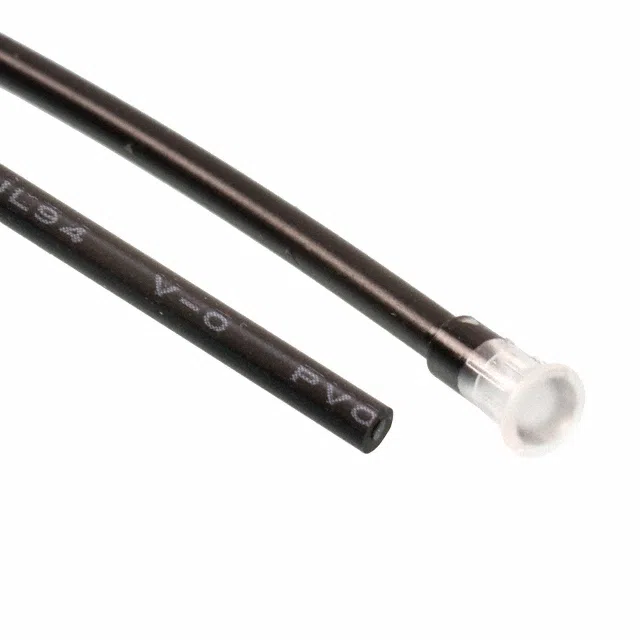
To hold the light pipe next to a SMD LED, you need a holder from Bivar. The SMFLP is a vertical holder that works with the LC series of light pipes.
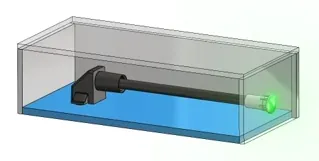
Their SZR series contains a right-angle holder that keeps the vertical space requirements low. The right-angle holder can be seen in the image below.
Footnotes
-
Bivar. SZR [product page]. Retrieved 2026-10-21, from https://catalog.bivar.com/viewitems/flexible-systems/szr. ↩